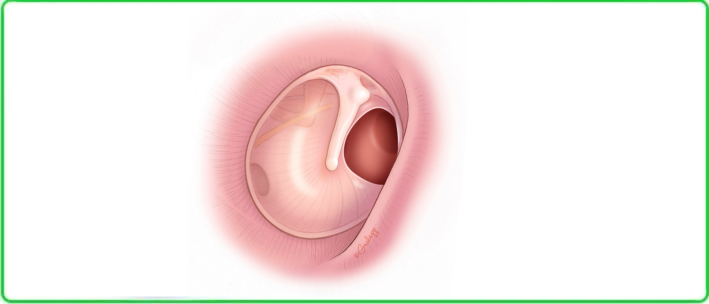
Тympanic membrane perforation (eardrum perforation) is a disruption of the thin membrane that separates the outer and middle ear. Normally, the eardrum plays several essential roles: it transmits sound vibrations, protects the middle ear from infection, and prevents foreign objects from entering.
When a hole (perforation) forms, hearing decreases and the ear becomes more vulnerable to infections.
How to Recognize a Perforated Eardrum
A rupture of the eardrum may occur due to trauma (blow, fall, insertion of a foreign object), sudden pressure changes (air travel, diving), or as a complication of acute otitis media.
Typical symptoms include:
- sharp ear pain that may subside suddenly;
- a popping sound or sensation of a “burst”;
- ear discharge (which may be purulent or blood-stained);
- ringing or buzzing in the ear;
- hearing loss;
- sometimes dizziness.
If you notice these symptoms, it is important to consult an ENT specialist for examination and accurate diagnosis.
Can the Eardrum Heal on Its Own?
Yes, in many cases a small perforation can heal spontaneously within a few weeks. This is especially true for fresh, uncomplicated ruptures.
Healing depends on several factors:
- the size of the perforation,
- presence or absence of infection,
- patient’s age,
- underlying health conditions.
If the hole is large or recurrent infections occur, surgical treatment may be recommended, such as myringoplasty or tympanoplasty.
How to Speed Up Eardrum Healing
To support natural recovery of the tympanic membrane:
- avoid getting water in the ear (no swimming, protect the ear while showering);
- do not use cotton swabs or insert objects into the ear canal;
- avoid loud sounds and sudden pressure changes;
- follow your doctor’s recommendations for treating inflammation if present;
- maintain a healthy immune system through proper nutrition.
In some cases, an ENT doctor may prescribe physiotherapy to promote healing.
Ear Drops Permitted for Eardrum Perforation
It is essential to remember that not all ear drops are safe when the eardrum is perforated. Some medications may pass into the middle ear and damage the auditory nerve.
Usually, doctors prescribe drops with antiseptic or anti-inflammatory properties that do not contain ototoxic substances. Only an ENT specialist should select treatment after an examination — self-medication is strictly prohibited.
What Not to Do if the Eardrum is Perforated
- do not instill alcohol-based solutions or aggressive liquids;
- do not rinse the ear on your own;
- avoid using drops not prescribed by a doctor;
- avoid swimming, diving, or flying without medical advice;
- do not listen to loud music through headphones.
Living with a Hole in the Eardrum
If the eardrum does not close on its own and surgery is not performed, it is possible to live with the perforation, but risks remain: recurrent infections, chronic otitis, and progressive hearing loss.
To minimize risks:
- visit an ENT doctor regularly,
- protect the ear from water,
- prevent colds and chronic infections,
- discuss surgical options if hearing worsens.
Surgical Repair of the Eardrum
When spontaneous healing does not occur, surgical restoration may be needed:
- Myringoplasty — closing the hole with the patient’s own tissue;
- Tympanoplasty — eardrum reconstruction with possible repair of the ossicles if necessary.
After surgery, hearing is usually restored, and the risk of infection decreases significantly.
Treatment of Eardrum Perforation at KindCare
At KindCare Medical Center, we provide advanced diagnostics and treatment for ear conditions, including tympanic membrane perforations.
Our ENT specialist, Dr. Maryna, PhD, Associate Professor, offers modern, evidence-based care.
At KindCare you can expect:
- Accurate diagnostics — otomicroscopy, ear endoscopy, audiometry;
- Personalized treatment plans — safe ear drops, physiotherapy, monitoring of healing progress;
- Surgical care — myringoplasty and tympanoplasty using advanced techniques;
- Individualized approach — therapy tailored to age, health status, and lifestyle.
If you suspect a perforated eardrum or want to accelerate recovery, seeking help at KindCare Medical Center ensures qualified care and minimizes the risk of complications.