People who have lost their ability to smell due to illness or an accident speak of a profound sense of loss — so great that they could never have imagined how much it would change their lives. It is hard to put into words what those who have lost their sense of smell experience: everyday joys become dimmer, and their quality of life significantly decreases.
Loss of smell is one of the warning signs that may indicate the presence of nasal polyps.
What Are Nasal Polyps
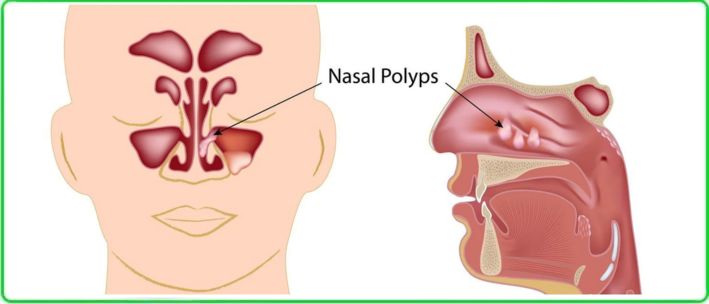
Nasal polyps are benign, soft growths of the mucous membrane in the nose or paranasal sinuses. The main symptoms include:
- persistent nasal congestion;
- reduced or lost sense of smell;
- mucus dripping down the back of the throat (postnasal drip);
- watery or mucous nasal discharge;
- a feeling of pressure or heaviness in the facial area.
Polyps are often bilateral and are associated with chronic inflammation, allergies, aspirin intolerance, cystic fibrosis, or certain infections.
Symptoms and Clinical Presentation
- Nasal congestion — children or adults may start breathing through their mouth.
- Hyposmia or anosmia — partial or complete loss of smell.
- Postnasal drip — mucus flowing into the throat.
- Facial heaviness, less often pain or headache.
To diagnose CRSwNP (chronic rhinosinusitis with nasal polyps), bilateral polyps must be visualized in the middle nasal meatus by endoscopy, with symptoms lasting at least 12 weeks.
Diagnosis
- Endoscopic examination of the nasal cavity and middle meatus.
- CT scan of the paranasal sinuses to assess anatomy and plan treatment.
- Severe disease classification — the condition is considered severe if symptoms persist despite optimal medical therapy, after surgery, and no more than two courses of systemic steroids or antibiotics per year.
Treatment Methods
- Medical Therapy
Intranasal corticosteroids (fluticasone, budesonide) are the first-line treatment to reduce polyp size and control symptoms.
Additional measures:
- saline nasal irrigations;
- short courses of systemic corticosteroids during exacerbations (with caution due to side effects);
- steroid injections directly into the polyp — an alternative to oral therapy with fewer systemic side effects.
- Surgical Treatment
Functional Endoscopic Sinus Surgery (FESS) — removal of polyps and diseased mucosa, restoration of sinus ventilation and drainage. This improves the effectiveness of subsequent topical therapy. Success is achieved in 80–90% of cases with a low risk of complications.
- Biologic Therapy
For patients with CRSwNP who do not respond to medical and surgical treatment, EPOS 2020 recommends biologic agents. They block key inflammatory mechanisms, reduce polyp volume, and lower the frequency of repeat surgeries.
KINDCARE MEDICAL CENTER
At KindCare, the diagnosis and treatment of nasal polyps follow EPOS 2020 international standards:
- Endoscopy and CT for accurate diagnosis;
- Prescription of intranasal steroids and saline irrigations;
- Systemic or injectable steroids when necessary;
- Endoscopic surgery if conservative therapy is ineffective;
- Biologic therapy for resistant forms.
Team approach:
- ENT Specialist — Dr. Maryna, PhD, Associate Professor, 25 years of experience;
- Pediatrician — Dr. Irina, 25+ years of experience, expert in disease prevention in children.
Prevention and Disease Control
ENT specialist Dr. Maryna, PhD, Associate Professor, emphasizes the importance of prevention:
- regular nasal irrigation after treatment;
- allergy and comorbidity management;
- preventive ENT check-ups 1–2 times a year.
KindCare Medical Center offers a full cycle of care — from early diagnosis and medical treatment to surgery and biologic therapy — ensuring a personalized, evidence-based approach.
Book a consultation — we will help restore your free breathing and sense of smell.