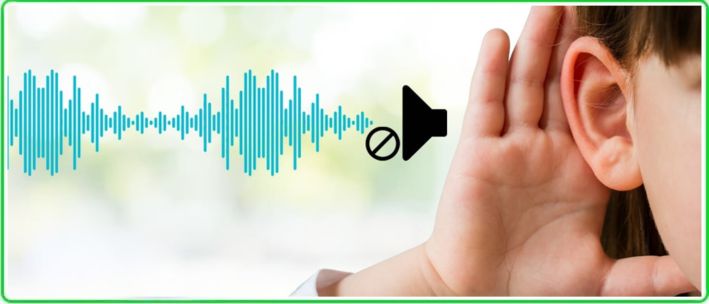
Recently, a young mother came to see me with her two-year-old son. He looked like a typical cheerful and active toddler. The mother had no complaints about her child’s development.
— What’s your name? — I asked him.
The boy was silent.
— And what does he usually say? — I clarified.
— Nothing, — the mother calmly replied. — The speech therapist said that if he doesn’t start talking by the age of three, she’ll refer us to a center for evaluation.
Why This Is Dangerous
Dear parents, it doesn’t work this way. Neither a speech therapist nor an evaluation at a center will teach a child to speak if they cannot hear. And more and more children are diagnosed with hearing loss today. The problem is that the diagnosis of “hearing impairment” is often made almost a year later than it could be with modern methods. That year is critical for the formation of speech and brain development.
Causes of Hearing Loss
Hearing loss can be:
- Congenital: genetic anomalies, intrauterine infections (rubella, CMV), birth complications, prematurity, hypoxia.
- Acquired: frequent or severe ear infections, head injuries, prolonged exposure to loud noise, viral and bacterial infections, use of ototoxic drugs.
Risks of Late Diagnosis
Even mild hearing loss can cause:
- incomplete perception of speech;
- delayed speech development;
- listening fatigue and difficulty concentrating;
- balance problems;
- increased risk of injury (10 times higher due to not hearing danger signals).
Early Detection — Newborn Hearing Screening
Hearing screening is performed in the maternity hospital using OAE (otoacoustic emissions) or ABR (auditory brainstem response) — quick, painless, and reliable tests. Even if the result is normal, hearing should be checked again at 6 months, 1 year, before starting kindergarten, and whenever there are concerns. The earlier hearing loss is detected, the higher the chances of full hearing compensation and normal speech development.
Signs of Hearing Problems
Parents should be alert if their child:
- does not respond to quiet sounds or their name being called;
- frequently asks for repetition;
- responds only to visual cues;
- does not repeat age-appropriate words;
- becomes irritable in noisy environments.
What to Do if You Suspect Hearing Loss
- Do not wait “until they start talking” — check hearing immediately.
- Consult an ENT specialist or audiologist at the first sign of concern.
- Use modern diagnostic methods: otoacoustic emissions, tympanometry, audiometry.
Modern Diagnostic Methods
- Tympanometry — assesses the mobility of the eardrum.
- OAE — test for newborns and infants.
- Audiometry — evaluates hearing thresholds in a play-based or computer format.
Correction and Treatment
- For inflammatory conditions — treat ENT pathology.
- For hearing loss — hearing aids.
- For severe congenital impairment — cochlear implantation and early auditory rehabilitation.
Hearing correction should never be delayed. A six-month delay in early childhood is lost time for speech and brain development.
Dr. Maryna Kryshtopava, PhD, Associate Professor, practicing ENT specialist:
“Speech begins with hearing. The earlier we identify the problem, the greater the chance that the child will hear, speak, and develop like their peers.”