
VOCAL FOLD NODULES: DIAGNOSIS AND THERAPY
The voice is more than just a tool for communication. For a teacher — it is the main working instrument. For a singer — it is part of identity and profession. For a child — it is a key to learning and social life. But the voice is fragile. Hoarseness, nodules, overuse, trauma, or disease can easily disrupt it. Phoniatrics is a branch of otolaryngology that studies the voice, speech, and their disorders. Modern phoniatrics combines diagnostics, treatment, and prevention to restore the voice, even in complex cases.
What Are Vocal Fold Nodules?
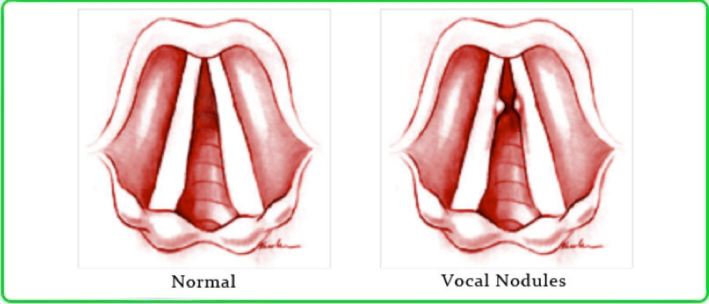
Vocal fold nodules (also called singer’s or teacher’s nodules) are benign growths caused by chronic overuse. They are often referred to as the “disease of teachers” or “singer’s nodules.”
Symptoms
Both nodules and polyps cause similar symptoms:
- Hoarseness,
- Weak voice,
- Rough or scratchy sound,
- Ear pain,
- Lump sensation in the throat,
- Neck tension or pain,
- Difficulty changing pitch,
- Rapid vocal fatigue, the voice “gives out.”
Causes
The main cause is incorrect or excessive voice use.
- Long-term overuse → nodules.
- One episode of extreme strain (e.g., shouting at a concert) → polyp.
Additional risk factors:
- Smoking,
- Allergies,
- Gastroesophageal reflux (GERD),
- Thyroid disease,
- Excess caffeine or alcohol (dry the mucosa).
Diagnosis
If hoarseness lasts longer than 2–3 weeks, see a doctor.
- ENT specialist will perform an exam and endoscopy, will assess voice quality.
- Neurologist or allergist may be involved if needed.
- The key methods: laryngoscopy and stroboscopy — with endoscope and strobe light, doctors can see vocal fold vibrations and lesions.
- Acoustic voice analysis (spectrogram, Jitter, Shimmer).
Treatment
The approach depends on the cause and size of the lesion.
- Medical therapy: treat reflux, allergy, thyroid conditions; stop smoking.
- Voice therapy:
- Voice hygiene education,
- Elimination of harmful habits (shouting, whispering, vocal abuse),
- Breathing techniques,
- Specific vocal exercises,
- Relaxation and stress management.
- Surgical removal (delicate microlaryngoscopic surgery): only for large or persistent nodules/polyps when conservative treatment fails. In children, surgery is rarely performed.
After surgery, voice rehabilitation with ENT is essential, otherwise nodules may recur.
Why Patients Choose KindCare Medical Center
- Advanced diagnostic and surgical equipment for laryngeal disorders.
- Individual voice therapy programs.
- Team approach: ENT doctor, neurologist.
- Minimally invasive techniques and fast recovery.
- Over 23 years of experience of Dr. Maryna Kryshtopava, PhD, Associate Professor, expert in voice disorders.
At KindCare Medical Center we help patients not only restore their voice but also protect its health for the future. Book your consultation today and receive precise diagnostics and modern treatment of voice disorders.