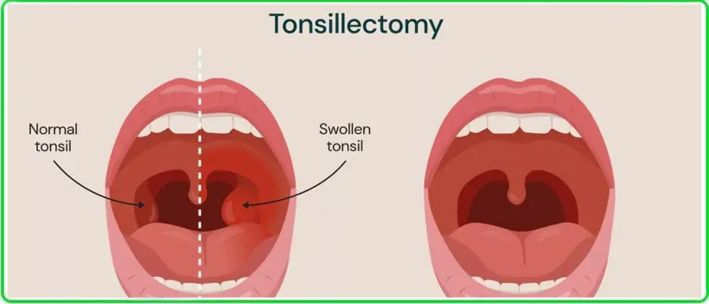
Most people first hear about tonsils only when they start causing problems. While healthy tonsils perform their protective role, we hardly notice them. But when tonsils stop functioning properly, they may turn into a chronic source of infection and inflammation. Inflamed tonsils can lead to fatigue, joint pain, headaches, and other symptoms of chronic tonsillitis. In such cases, when conservative treatment fails, an ENT specialist may recommend tonsil removal.
What is Tonsillectomy?
A tonsillectomy is the surgical procedure to remove the tonsils. This treatment has been known for more than 2,000 years and remains one of the most common ENT operations worldwide. The procedure usually lasts about one hour and is performed under general anesthesia. After surgery, pain and throat inflammation may last up to two weeks. Children may miss about a week of school, while adults typically need a longer recovery period.
What are Palatine Tonsils?
Palatine tonsils are paired lymphoid tissue structures located on each side of the throat, between the soft palate and the tongue. They are clearly visible if you open your mouth in front of a mirror with a light. In younger children (under nine years old), tonsils can appear larger, while during adolescence they usually shrink.
From an ENT perspective, tonsils are an important part of the lymphatic system. They act as the first line of defense, capturing bacteria and viruses before they spread further into the body.
Common Tonsil Disorders
Tonsillitis – inflammation of the tonsils, most often caused by viruses or bacteria. It typically affects children between 5 and 15 years old, but adults may also develop it.
Symptoms include: sore throat, swollen tonsils, white or yellow coating, fever, painful swallowing, and enlarged lymph nodes.
An ENT may use a rapid test or throat swab to determine whether the cause is viral or bacterial. Viral tonsillitis requires rest, hydration, and supportive care, while bacterial tonsillitis (e.g., strep throat) is treated with antibiotics.
Tonsil stones (tonsilloliths) – calcified debris that accumulates in the crypts (natural folds) of the tonsils. Symptoms include:
- bad breath,
- small smelly lumps in the throat,
- throat irritation.
If you cannot remove tonsil stones at home, it is important to consult an ENT specialist.
When is Tonsil Removal Necessary?
Only an ENT doctor can determine whether tonsillectomy is needed. The main indications include:
- Enlarged tonsils that block breathing during sleep (obstructive sleep apnea),
- Chronic or recurrent throat infections,
- Persistent bad breath caused by tonsillar disease.
Types of Tonsillectomy
Modern otolaryngology offers several surgical options:
- Classical tonsillectomy – surgical excision with a scalpel.
- Laser tonsillectomy – laser cauterizes tissue and seals blood vessels, reducing bleeding.
- Radiofrequency tonsillectomy – removal with a radiofrequency knife, providing a gentler effect.
The choice of method depends on the patient’s age, tonsil condition, and coexisting health factors.
Preparing for Surgery
Before tonsillectomy, patients undergo:
- ENT consultation and endoscopic examination,
- blood tests (general, biochemical, coagulation profile),
- ECG,
- anesthesiologist and therapist consultation.
Patients should inform their doctor about all medications they are taking. Blood-thinning drugs (anticoagulants, aspirin, some painkillers) are usually stopped 5–7 days before surgery. On the day of the procedure, patients must arrive on an empty stomach if general anesthesia is planned.
Recovery After Tonsillectomy
Hospitalization is usually short; many patients can go home within a few hours.
Early recommendations:
- On the day of surgery – only room-temperature fluids.
- In the following days – soft food (yogurt, fruit puree).
- Avoid physical activity for at least 4 weeks.
- Take prescribed painkillers, antibiotics, and fever reducers.
What to expect:
- throat pain, sometimes radiating to the ears or jaw (1–2 weeks),
- white or yellowish coating at the surgical site,
- slight fever,
- complete healing of the throat within 2.5–3 weeks.
Possible Complications
The most common complication is bleeding (1–8% of cases). Rarely, it requires repeat surgery. Infections or severe pain during swallowing may also occur. Following all medical recommendations significantly reduces risks.
Life After Tonsillectomy
After removal, other lymphoid tissues in the throat take over immune functions. Overall immunity remains intact, while chronic infection disappears. Patients often note:
- fewer sore throats,
- improved breathing and sleep,
- less fatigue and illness,
- a clearer, healthier voice.
Tonsillectomy at KindCare Medical Center
At KindCare Medical Center (Dubai), tonsillectomy is performed using advanced, minimally invasive techniques. We provide:
- accurate diagnostics (endoscopy, laboratory testing),
- selection of the most suitable surgical method (laser, radiofrequency),
- safe anesthesia and careful monitoring,
- quick recovery with minimal discomfort.
Dr. Maryna Kryshtopava — ENT specialist, PhD, Associate Professor, with over 23 years of experience. Expert in endoscopic and laser ENT surgery, specializing in tonsillectomy for both adults and children.